Showing posts with label Books. Show all posts

Wednesday, January 16, 2013

SEAL Team 666

In SEAL Team 666, Jack Walker is going through the selection process to become a U.S. Navy SEAL, one of the world’s elite Special Forces organizations, when he is graduated early to join an even more exclusive group: SEAL Team 666, a five man (and one dog) team of operators that deal with supernatural threats to the United States. It seems that Jack, due to an incident in his childhood, has the ability to sense supernatural danger, which makes him valuable to the group beyond his basic sniper assignment. Unfortunately for Jack, his spidey sense initially manifests itself as complete paralysis, which could be a problem in combat situations.

Jack has little time to adapt to his new role, as the team is off in pursuit of a Karen rebel in Myanmar who plans to bring forward an ancient demon, controlled by a custom suit of human skin. Casualties among the good guys mount rapidly as time runs out to stop the final ceremony.

Weston Ochse is the author of one of the best novels dealing with the supernatural in the last twenty years, Scarecrow Gods, and this is the launch of a new series blending military fiction (think Tom Clancy) with supernatural literature. I don’t think this is as good as Scarecrow Gods – there isn’t the depth of characterization found in the earlier novel – but few books are. I think this will be good reading for those looking for a book filled with action and horror. I will certainly look forward to the next book in the series.

Irrelevant trivia: because it is a pet peeve of mine, I was overjoyed to see that Ochse refers to the ammunition storage devices for the rifles used by the SEALs by the correct name of “magazine.” Too many writers use the word “clip”, a mistake they beat out of you in basic training. (Few modern weapons use free-standing clips, although many types of magazines contain clips.)
.

Tuesday, November 6, 2012

Dungeon Brain

This is part of a blog tour organized by the Mistress of Horror herself, the one and only Dark Eva.

I read a lot of books, but it’s a little bit rare to come across one with a truly original concept. Novels tend to recycle the same old tropes, with only the execution to set them apart. I can’t say that about Benjamin Kane Ethridge’s new novel Dungeon Brain, as it definitely took me to unexpected places.

When the story begins, June Nilman, whose surname seems quite appropriate, wakes in an abandoned hospital somewhere in a dystopian future. It’s a world devastated by war, where programmed content is fed to the inhabitants through ocular implants. June has a few problems. She suffers from some form of amnesia, but even worse, her brain has apparently been stuffed with myriad other personalities and memories, a sort of punitive schizophrenia. Finding herself in the mental mob is a difficult task. In addition to her psychological obstacles, she has a human nemesis in Maggie, a Nurse Ratched-type character who seems to control the institution as well as a type of alien creature that acts as a sort of security patrol.

June needs to escape, and to do so she needs to access the personalities locked in her head, with the danger of being lost inside them. Even if she manages to escape the labyrinthine facility, Maggie, and the creatures, there is no way of knowing things will be better outside her prison.

Dungeon Brain is more science fiction than horror, but it is certainly horrifying science fiction. Losing oneself inside yourself is probably about as scary a possibility as exists, and the novel reinforces Douglas Winter’s thirty-year-old assertion that horror is an emotion rather than a genre in and of itself.

Ethridge writes with clarity and literary depth, and does an excellent job of creating the feeling of existential terror that permeates the novel. His writing shows a sense of craft above what you typically encounter in the horror field today while still connecting on the visceral level where horror (emotion or genre) lives. This is the first of his books I’ve read, but it won’t be the last.

You can order Dungeon Brain from Amazon, and check back here on the 14th for a guest column from Mr. Ethridge.
.

Friday, October 19, 2012

Quiet House: A Halloween Story

If you are in the mood for a little seasonal reading at a great price, I would recommend “Quiet House: A Halloween Short Story” by Norman Prentiss, author of one of my favorite novellas, Invisible Fences. This story of psychological horror tells about the first year Jeremy is old enough to trick-or-treat, his anticipation at being able to visit the legendary Myrick house, his disappoint, and the consequences of a thoughtless act of revenge. The story is only 99¢, and can be ordered through Cemetery Dance or Amazon.
.

Thursday, October 4, 2012

This Dark Earth

I’ve been a horror fan for a very long time, since I was old enough to read, but it has been only in the last few years that I’ve really interacted with the people who write the books and make the movies I’ve enjoyed. Some of those interactions haven’t gone so well, like the actress who was offended when I mentioned she’d been in a horror movie or the writer who blew a gasket when I complimented, but for the most part those who make it their business to give you nightmares are surprisingly nice. In some cases, this has led to true friendship, as is the case with the writer of the book I’m reviewing here, the multi-talented John Hornor Jacobs. I’ve known John since well before he published his excellent debut, Southern Gods, and I cherish his friendship.

I don’t remember exactly how long it’s been since I read his recently published novel This Dark Earth. I know it was before Southern Gods was sold, and I remember telling John he probably didn’t want me to read it, since I’m several years past enjoyment of zombie novels. (I realize this makes me an outlier amongst horror readers, many of whom don’t read anything much except zombie novels, but I felt for a while they have exhausted their appeal.) He wanted me to read it anyhow, and I’m glad it will. It may be the last zombie novel I will ever like, but like it I did.

Lucy Ingersoll is an ER doctor in Arkansas when a mysterious disease begins transforming people into maniacal creatures. The military tries to contain the problem by killing the infected and uninfected in the hospital, and Lucy narrowly escapes. She is helped in her escape by a trucker nick-named “Knock-Out”, and manages to reunite with her son Gus, just before the powers-that-be make things worse by nuking the area. Lucy, Knock-Out, and Gus survive, although at a cost. They join forces with a small military force led by Lieutenant Wallace, who can use Lucy’s medical skills.

The story fast forwards by about four years. Gus has proved to be quite a prodigy, and has helped the survivors establish a settlement (imaginatively placed on a bridge, ideal for defensive purposes). The zombie threat is still there, although the greater danger in this post-apocalyptic world is other human survivors.
So, why should you read this novel instead of other zombie stories? Because Jacobs does a masterful job creating believable characters. Lucy, Knock-Out, Gus and the rest come to life. Whether you like them or not, you understand them, and you care what happens to them. If you are a zombie fan, you definitely don’t want to miss this, and if you aren’t, you will probably be surprised how compelling it is.

I’m not really a fan of the cover, although it does look better up close than in a photograph, but if it sells the book, then that’s all it’s meant to do. Also, there is plenty of evidence that taste in book covers doesn’t reflect the zeitgeist.

I also keep calling the book This Dead Earth, but I blame that on David Wilbanks.
.

Monday, September 10, 2012

Empty Places

I go away for a while and Blogger has a new layout. I’ll probably get used to it about the time they change it again. Due to some bizarre goings-on, I’ve been away from this for over half a year. Dagon willing, I will be posting more regularly as we go on.

Gary Raisor, author of the excellent novel Less Than Human and editor of the equally impressive anthology Obsessions, has a new release out in ebook form called Empty Places. I haven’t had a chance to read it yet, but I look forward to it, as it certainly sounds like a winner. Joe Lansdale likes it, so why shouldn’t you?
.

Thursday, November 17, 2011

WITA #3: Greg F. Gifune


Resuming the series of reprints of interviews I did for Cemetery Dance, today we reprint an interview with author Greg F. Gifune which originally appeared on Cemetery Dance' website on July 7, 2010. As always, these reprints appear courtesy of Cemetery Dance, and the reader should remember the interview is over a year old, so if the subject says "coming soon", the book is probably already out there. So, fire up the old Wayback Machine...

The author we’re pulling away from work this time is Greg F. Gifune. A Massachusetts native, Greg is the highly-regarded author of such works as The Bleeding Season and Children of Chaos. His most recent book from Cemetery Dance is Catching Hell.

WITA -Your new release from Cemetery Dance is Catching Hell. Tell us a little about it.

Greg Gifune - It’s set in 1983, and is about three young actors and a stagehand from a summer stock theater who take off from Cape Cod to visit a resort in Maine as a kind of last hooray before they either go on to college or move to New York City to chase their dreams. On the way, they encounter a bizarre storm and wind up in a peculiar town that seems to be stuck in the 1940s. But the town is anything but the quaint and harmless little hamlet it appears to be at first glance, and once they become trapped there they realize the locals are harboring some horrible secrets and that they’ll have to fight their way out to survive the night, or risk falling prey to a cycle of depravity and violence at the hands of a demonic creature so horrifying few will even speak its name.

WITA -Compared to many of your peers, you are quite prolific (Your website shows 14 books written by you). How do you manage to be as productive as you are without sacrificing quality?

GG - Do nothing but work and have virtually no life? No, seriously, it may appear that I’m a bit more prolific than I really am, as I’ve been writing professionally now for more than a decade full-time, so when you spread my list of published novels out over a 10 or 11 year timeframe it’s probably not quite as impressive. And also, usually (not always but usually) my novels sit in my head literally for years before I write them, so by the time I’m putting them to paper I have a solid grasp of what I’m doing with it and what I want. Still, I have managed to produce a good amount of work, you’re right. Much of that has been because I’ve been in demand from the publishers I’ve worked with so I’m very grateful to them and the fans for that. I’ve learned how to juggle projects and to do the things required of a professional novelist these days, and to do them in a manner where quality is not sacrificed. I also work very hard at what I do and strive for that quality. The harder I work, the more it pays off.

WITA -Now that you’ve been writing for a while, how has your style changed over time? Does the process come easier to you now?

GG - Although it took time to find my voice and develop my style, because I wrote for years before I ever wrote a novel, I was able to have both established by the time I did. Since then I think my style has remained the same, more or less, but it has evolved, and continues to (hopefully for the better). The only thing is that I’ve had to speed my process up a bit, which is not entirely natural for me, but it’s a shift I’ve learned to live with because it’s a necessary.

WITA -Everyone wonders what the chef eats when he’s away from his restaurant, so what do you read for entertainment? Who are some of the writers who have had an influence on your work?

GG - Unfortunately I don’t have the time to read for pleasure like I used to, but when I do have the time I tend to mix it up between fiction and nonfiction. I have very eclectic tastes when it comes to just about everything, so it’s a wide range in both. I read The New Yorker too, have for years, and I enjoy that. As for writers who have influenced me, there have been many, but I rarely list them because I always forget some. Here’s a few: Virginia Woolf, Jim Thompson, Tennessee Williams.

WITA -Writing can be lonely work, and sometimes it takes a while to receive positive reinforcement for what you do. What made you decide on writing as a career?

GG - Very true, writing is very isolating at times and can be very lonely, and it’s also (at times) a very brutal business. I never really decided on it though, it decided for me. I’ve always known what I wanted to do, always wanted to be a writer and an actor, and from the time I was a little kid, I mean, I don’t ever remember not knowing what I wanted to do. I studied, worked in and pursued both for years. Sounds corny but it’s true, it’s who I am. The literal decision came in my early 30s, when I decided if I didn’t commit and really go after a career as a writer, I never would. So I did and fortunately it paid off.

WITA -What should we be looking for in the near future from Greg Gifune?

GG - More novels coming later this year and next, and recently I’ve had quite a bit of interest from Hollywood (and some indi filmmakers as well) regarding several novels of mine, so we’ll see what happens there. My website is probably the best way to stay on top of things: www.gregfgifune.com.
.

Monday, October 31, 2011

From A Buick 8


For the Halloween season of October this year, I resolved to spend most of my reading time re-reading old favorites. Grand masters like Stephen King, Robert R. McCammon, Ramsey Campbell, Peter Straub, and my annual re-read of “The Colour Our of Space” guaranteed a spooky time. Throw in a couple of modern things (Bryan Smith’s Kayla and the Devil and Norman Partridge classic Halloween story Dark Harvest) and I was set.

For my King selection I decided to go with a book I hadn’t read since its release, and one of his books that inspires a great division of opinion among his fans: From A Buick 8.

In western Pennsylvania, a mysterious man drives his vintage Buick Roadmaster into a service station and disappears, leaving the car behind. The car is taken into custody by the local barracks of the State Police, and stays in a storage shed on their property for the next quarter of a century. The troopers learn the thing really isn’t a car, just a mimicry of a car. Strange lights are occasionally seen around it, there are mysterious temperature fluctuations nearby, and sometimes things come through. People, animals, and things also vanish nearby, indicating the “car” may be some sort of portal to…somewhere else. The story is told as a flashback, with the older troopers telling it to Ned Wilcox, the young son of one of the troopers who first encountered the object, and who has been recently slain in a roadside accident.

The story ties into King’s larger Dark Tower mythos, but it reads perfectly well without any knowledge of that series, and in my mind, not knowing anything else heightens the sense of mystery, so it shouldn’t make it difficult to read for someone who hasn’t read the other books. Many King fans dislike the book because there is a lack of a definite conclusion, and most of the mysteries are not solved in the end.
From A Buick 8 features two themes of King’s work. The first is the obvious connection to cars. Like Christine, the central object is a vintage car (or something that looks like one) with malevolent intent. King, like me, is old enough to remember the glory days of American car culture, so classic cars are a strong nostalgic totem in his work.

The other theme is one found in some of King’s later work, and is what frustrated many readers, the lack of a definitive conclusion. My pet theory is this relates to the age of the writer. When you are young, you have an often-misplaced confidence that in time all things will be revealed, all mysteries will be solved. Thus the more definitive endings and explanations of King’s earlier work. Carrie dies, the Overlook hotel explodes, Salem’s Lot burns to the ground. As you get older, you start to realize that not all puzzles will be solved, not all truths will be made clear. Sometimes, Godot never arrives. This is found in a good deal of King’s later work, in fact; his next novel, The Colorado Kid, is structurally identical to From A Buick 8. Old-timers tell a young person about a mystery, and that youngster is frustrated by the lack of an ending.

Although I understand why a lot of people don’t like From A Buick 8, the story works for me. Not every secret will be told, and sometimes you have to use your imagination to fill in the blanks.
.

Sunday, October 23, 2011

Fear & Undertaker's Moon


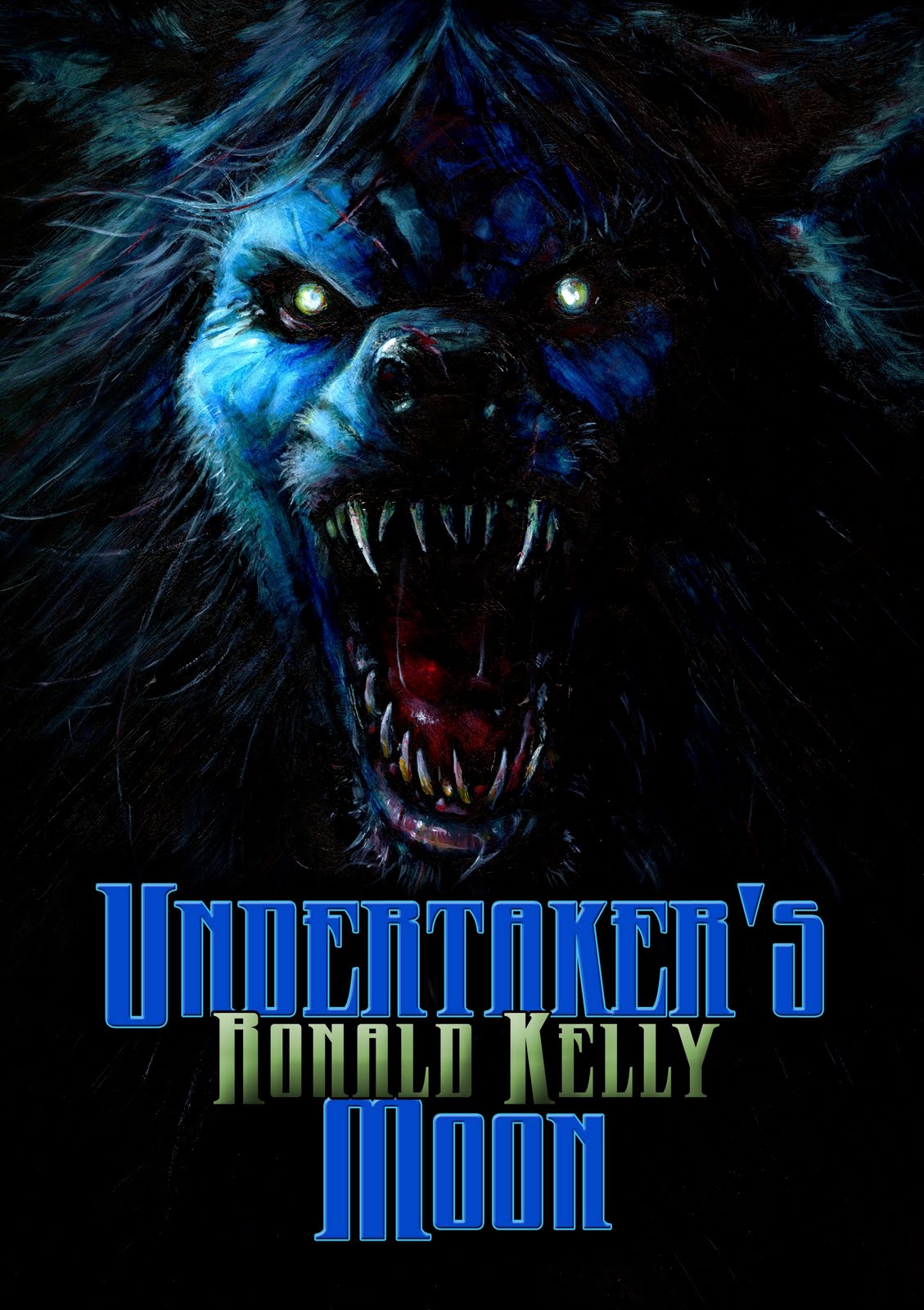
After much anticipation, the first two volumes in The Essential Ronald Kelly Collection are available from Thunderstorm Books. The series will feature all eight of Ron’s books published by Zebra in the early 90s, with beautiful covers by Alex McVey, and each will feature a new novella by Ron set in the world of that particular novel, as well as a “writing of” feature which will delve into the circumstances behind writing the book. The first two titles to be released are UNDERTAKER’S MOON and FEAR. I’ve read both in previous editions, and they are horror classics, with a lot of people considering FEAR to be the definitive Ronald Kelly novel.
.

Tuesday, October 18, 2011

Kayla and the Devil


At the time of the implosion of Dorchester Publishing’s imprint Leisure Books, it was the principal mass market source of horror fiction, publishing 24 new and reprint titles a year. Since its fall, the authors of those books have had to find new means to get their books to the public. The best writer working in the Dorchester stable at that time was Bryan Smith (House of Blood, Soultaker, Freakshow), who has moved on to publish with Deadite Press. He has also ventured into e-publishing, and his latest book is Kayla and the Devil.

Kayla Monroe is a sophomore at Vanderbilt, and not that nice of a person. She is sarcastic and the definition of a “mean girl.” Since she’s also rich and pretty, her personality has never been an obstacle in her social life. In the last year, however, everyone has begun to shun her. She has no friends and even nerds won’t sleep with her. This is a mystery to her until she meets a stranger in the park, who explains to her she has been placed under a shunning spell which will keep everyone away from her. The stranger can lift the spell, however, and will be glad to do so in exchange for a couple of things: Kayla has to kill an innocent person, and give up her soul. If you paid attention to the title, you know who the stranger is.

As Kayla seeks to fulfill her end of the bargain, she finds out she might not be quite as mean as she thinks. She also gets to meet, courtesy of her benefactor, Jack the Ripper and the Countess Elizabeth Bathory, who functions as sort of middle management for Lucifer. Kayla has to make a choice between eternal satanic servitude and being unable to get a date for the rest of her life.

Stories about deals with the devil have a long history in literature, from Faust to “The Devil and Daniel Webster” and so on. It is a rich subject for exploration, and Smith handles it exceptionally well. There has always been an element of humor in Smith’s books, and that gets a lot of play here. The book is a bit of a hybrid between the author’s previous work and urban fantasy. There is plenty of elements of each genre, enough visceral scenes to satisfy horror fans, and enough of a playful element to attract readers who are more likely to favor Jim Butcher over Stephen King. Highly recommended.
.

Thursday, September 1, 2011

New Kealan Patrick Burke E-Mail Newsletter


Kealan Patrick Burke (Seldom Seen In August) has started a new e-mail newsletter. To subscribe, send a blank e-mail to elderlemon2010@aol.com with “newsletter” in the subject line. Those who subscribe will receive an electronic copy of his excellent novel Currency of Souls, and will be entered into a drawing to receive a copy of his forthcoming novel Kin. For a little more about Mr. Burke, I interviewed him a while back here. Kealan Patrick Burke is one of the very best writers working in the genre today; if you aren’t reading him, you should be.
.

Invasion


“It's a hard rain's a-gonna fall.” – Bob Dylan

In the case of William Meikle’s (The Amulet) Invasion, it’s more of a green rain (or snow), but it is pretty hard on those on whom it falls anyway.

On a winter day in the Canadian Maritimes, a strange snow starts to fall. It is green, for one thing, but more ominously, has an acidic effect on anything living on which it falls. People, dogs, plants, all are dissolved by contact with the eerie precipitation. The only people who survive are those who have immediate access to shelter, and the phenomenon is not localized, but is spread all over the east coast, and elsewhere in the world. Civilization begins to collapse under the onslaught, and it gets worse. Alien organisms begin to grow in the biological sludge left behind, and the survivors soon learn this is the precursor to a full-fledged alien invasion.

The story follows Alice, a biologist who gives some of the scientific exposition for the benefit of the readers and John Hiscock (I realize this is a real name of a real person, but I could hear Beavis and Butthead going “heh, heh” in my head every time I read it.), a survivalist and unlikely hero. Alice has a psychic ability to resist the invaders. They manage to find each other and join the military in a desperate attempt to stop the onslaught.

The whole thing has a 50s sci-fi movie feel, and the obvious point of reference is John Wyndham’s classic sci-fi disaster novel The Day of the Triffids, the most famous alien plant invasion story. The author does a good job of keeping the action moving. I could quibble about some minor details that are wrong, mostly military related (no one in the American military, Army or Navy, has held five star rank since Omar Bradley died, for instance) but I won’t. Although I guess I just did. There does seem to be too much story for the relatively short length (it’s more a novella than a full novel) and both Alice’s powers and the appearance of the professor are a bit deus ex machina.

The good far outweighs the minor problems, however. This is meant to be a fast-paced action piece, and I enjoyed it. It isn’t the deep sort of thing you read to reveal some existential truth about your life, but how often do you want to read something like that anyway? Invasion is available as an e-book or as an archaic tree-killing print edition.
.

Wednesday, August 31, 2011

Under The Dome: The Series


Stephen King’s novel Under the Dome will become a TV series for the Showtime cable network, according the Deadline Hollywood. This will be developed for television by Steven Spielberg’s Dreamworks production company, so look for an addition of a precocious tween boy with a distant father to the story. Hopefully it will do better than the ill-fated plans for The Dark Tower films and series.
.

Sunday, August 28, 2011

Supergods


In the collective opinion, people who read comic books are geeks, and the lowest of the comic book geeks are those who read superhero comics. The general idea is, if you are going to read funny books at least read gritty realistic ones, refer to them as graphic novels, and salvage at least a little of your dignity. Books that feature guys (and gals) flying around in long underwear with magic powers are embarrassing according to general belief.

Grant Morrison, one of the more prominent comic writers of the modern era, disagrees with this. In his new book Supergods (not a comic book, for the record), he argues that the traditional superheroes like Superman, Batman, The Flash, etc., are important to us for their totemic power, and their sometime unrealistic devotion to a higher moral code is necessary to inspire us. We want to see our heroes soaring through the heavens above us, not wallowing in the muck like an ordinary being.

Supergods is both a memoir of Morrison and a history of the superhero genre, going back to the inception of superhero comics in the 1930s with early versions of Superman and Batman, kicking off the Golden Age, the revitalization of the form in the late 1950s in the Silver Age, and where our heroes stand now in the modern age. Along the way, he discusses his first exposure to American comics, brought to his native Scotland by American sailors, and his personal journey from novice to one of the more acclaimed writers in the field today. Along the way, he does an excellent job in explaining the subtext of most of the major comic storylines, divergent philosophies in writing the characters, and interestingly, the influence of mind-expanding chemicals on the superhero art form. (I got an unintentional laugh when Morrison explained the epiphanic vision he had in Thailand could not be explained by the relatively small amount of hashish he had ingested.)

Morrison discusses past legends of the genre like Bob Kane, Siegel and Schuster, Jack Kirby, and John Broome, as well as the work (and his personal relationships) with creators such as Alan Moore, Mark Waid, and Mark Millar. He is very blunt in his assessment of these writers and artists, even those who are his contemporaries. There is at least a hint of some minor feuds with other writers, particularly Alan Moore, and I do wish he had delved a little deeper into what seems a disapproving attitude toward his former protégée Millar. The book also deals with Morrison’s personal spiritual journey – he is a practioner of a shamanic form of personal religion.
Morrison is best known for his work re-inventing the previously minor DC character Animal Man, his own The Invisibles (which was an inspiration for The Matrix), the re-invention of the Justice League of America in JLA, and an interesting and controversial stint writing X-Men. I think his re-imagining of the moribund Justice League from what had become mostly a joke into a re-telling of ancient myths to be one of the better feats in comic book history. I also enjoyed his take on the X-Men, although the purists were up in arms at the time. (X-fans can be passionate and a little crazy. The other X-writer during Morrison's tenure was Chuck Austen, who was basically hounded out of comics by zealots angry at his take on the X-Men. I thought Austen did a good job, too.)

This is probably a book only for comic book fans, but if you are an aficionado of the gents in long underwear, you shouldn’t miss Supergods.
.

Saturday, August 27, 2011

WITA # 2: Tim Curran


Continuing to reprint the older We Interrupt This Author series, here is the second interview, originally posted on Cemetery Dance’ website on June 28, 2010. At the time of the interview, Tim’s book The Corpse King had just been released, so once again, this is taken a bit out of temporal context. The only change in the text is the re-insertion of a mention of the book Four Rode Out, which was deleted from the original post, as the official announcement for the book had not yet been made. As always, remember that what was on the horizon in mid-2010 may now be in the rearview mirror.

Here we are for the second in our series of short interviews with horror authors, following the success of the first one (I define success as: Didn’t get fired, didn’t get sued. Set the bar of success low, and you won’t have to deal with disappointment, kids). Our latest author to interrupt is Tim Curran.

A resident of Michigan, Tim Curran is the author of the acclaimed novels Dead Sea and The Hive. His most recent book is The Corpse King, now available from Cemetery Dance. Tim’s home on the web is www.corpseking.com. Here are a few questions with which we bothered him.


WITA: Tell us a little about The Corpse King. Am I correct in assuming Burke and Hare were a partial inspiration?

TIM CURRAN: Yes, definitely. Those two are the most famous of the 19th century Resurrection Men. So I certainly had them in mind. During my research of grave robbers I came across a fellow named Ben Crouch who operated out of London as part of the Borough Gang as it was known. He was a real entrepreneur of the dead. Not only did he and his friend Joseph Naples supply corpses to order for the medical schools, but they ran something of a cadaver supermarket—skeletons, body parts, entire corpses of men, women, and children preserved in vats in their makeshift warehouse which was in a cellar, I believe. They ran the truly first medical supply house in the UK. Crouch was known as “The Corpse King” which I, of course, stole for my novella title. I based my graverobbers, Clow and Kierney, upon Crouch and Naples to a certain extent, though I moved the action to Edinburgh, the traditional home of bodysnatching ever since Burke and Hare and Robert Louis Stevenson’s story. Nearly everything that happens in The Corpse King is based upon firsthand accounts of the time. Although most of the Resurrection Men were illiterate, some either told their tales to others or wrote them down themselves. I read quite a few of these and was amazed at the morbid, gallows humor these guys had. I incorporated that into Clow and Kerney. Other than my supernatural ghoul—The Corpse King of the title—there’s nothing truly imaginary in the book. Edinburgh in the 1820’s was a horrible place of overcrowded slums, rampant infectious disease, child labor, rats and lice, poverty and crime. Life was cheap. People worked fourteen hour days in linen mills with machinery that was extremely dangerous and when you lost a limb or were too sick to work, you were replaced that same day. It was no wonder the girls turned to prostitution and the boys to crime…including grave robbing.


WITA -You live in the U.P. (the Upper Peninsula of Michigan, for those not in the know), known for being remote and sparsely populated. Do you find this helps set the mood to write horror fiction?

TIM CURRAN - I think so in some ways. Winters are long and harsh up here and it’s not unusual for towns to get completely shut down for days because of blizzards sweeping down from Lake Superior. It can be a very eerie, surreal experience. Up in the Keweenaw—or the Copper Country as locals call it—the winters are so severe that it’s pointless to shovel the snow so they have tunnels connecting the buildings. When I wrote my novel Hive, all I had to do was step outside on a dark January night with the wind howling and the snow flying, the windchill down to twenty or thirty below, and it was very easy to channel Antarctica. The woods up here are another factor. They can be very weird and primeval when you’re deep out in them by yourself. Algernon Blackwood tapped into that very well with stories like “The Wendigo” and “The Willows.” There’s these very disturbing moments when you’ll be out in the forest, miles from the nearest logging road or fire-cut. The birds are singing, insects droning, wind up in the trees…and then, nothing. It’s like somebody threw a switch. Dead silent. No wind, no birds, nothing. And you wonder what causes something like that. It’ll make your skin crawl. Besides those two factors, there’s a lot of eccentric characters up here. When I was a kid there were remote villages where the locals still spoke Finnish and French, and the old Cornish copper miners—Cousin Jacks, they were called-would spin pretty wild tales out of their native Cornwall.


WITA -It’s easy to see by the titles of some of the anthologies in which your work has appeared H.P. Lovecraft is a source of inspiration. Who are some of the other writers who have influenced your work?

TC - Lovecraft, along with Robert E. Howard, was one of the first authors of the weird I came across as a kid so I’ll always be standing in his shadow to some extent. I’ve been influenced by just about everyone from Ray Bradbury to Jack London, James Herbert to Elmore Leonard. I’m a big fan of Simon Clark and Ramsey Campbell and I honestly think that Thomas Ligotti is probably the greatest writer of the weird since H.P. Lovecraft. I’m absolutely in awe of that man.


WITA -Speaking of things that influence you, what are some of the things other than books which stimulate the writing process for you?

TC - Just about anything, I find. Like most horror writers I tend to unconsciously look for shadows and weirdness in just about everything. I see two men hauling crates into a house and I wonder what’s in them. I find an abandoned shoe in the woods and I wonder what happened to the person who wore it. I see a lake by moonlight and I wonder what might crawl out of it. I watch a movie or a TV show and the whole time my mind is making the connections, plotting out what will happen next and how it will end. And when it doesn’t work out the way I thought, sometimes, if my idea is powerful enough, I have to write it the way I think it should have been done.


WITA - There was some talk a while back about your novel The Hive being optioned for film. Is this still a possibility, or has that opportunity passed?

TC - No, that’s all done with. I had two different production companies looking at it and they both backed out. What they promised and what they delivered were two different things. It did not leave me with a real upstanding opinion of the people in that business. I’d love to see Hive made into a movie, but I’m honestly leery of the whole process. I guess I wouldn’t believe it until I got a check in my hand!


WITA - What’s on the horizon for Tim Curran? What projects are you currently working on?

TC - I just finished writing up the afterword for my short story collection, Bone Marrow Stew, which will be published in winter 2011 by Tasmaniac Publications of Australia. I’ve been publishing stories since the mid-’90’s and always wanted to do a collection of them but I held back because I wanted it done the right way. And now, thanks to Steve Clark of Tasmaniac, it’s being given the royal treatment in a hardcover, lettered edition with a wraparound cover and 10 awesome internal illustrations by the great Keith Minnion. Simon Clark, one of my favorite writers, is doing the introduction. I’m very excited about it. If it sells well enough—and I hope it does—there’ll be a volume two. There’s two original stories in the book and 15 reprints from anthologies and small press magazines, many of which are pretty hard to come by now. It opens with my very first short story and goes on from there. Other than that, I just wrapped up the second Hive book a couple months ago and that should be out from ESP in late summer/early fall. I’ll also be in another Cemetery Dance book with Steve Vernon, Brian Keene, and Tim Lebbon called Four Rode Out, a collection of weird western novellas that’s really going to kick ass and we’re all pretty pumped about. I’m also working on a collection of my zombie stories for Severed Press that’ll be bookended by two new novellas. The latter of which I’ll be returning to Lovecraft for a Herbert West story concerning his exploits in World War I. Let’s see, I’m working on an alternate world/steampunk vampire novel, another about a necrophiliac, another about veterans of the Iraq War who can read the fears in your mind and externalize them, and still another about a life-eating car haunted by a demon. There’s others, but you get the picture: I like to keep busy.
.



Wednesday, August 24, 2011

The Silent Land


Some writers are difficult to fit into the narrow categories we widely use to describe fiction, and Graham Joyce is one of those. His books have elements of fantasy, science fiction, suspense, a little horror, and other sub-genres, and his work can be classified as all or none of those. This should only affect you if you separate the books on your shelves according to these categories, however. What should matter instead is Joyce is one of the better writers working today. His latest is The Silent Land.

Jake and Zoe are a young married couple on a ski holiday in France. Life seems to be going well for them, and Zoe is searching for the right time to tell Jake she’s pregnant. Their luck turns when they are caught in an avalanche on the slopes. Zoe is buried and barely rescued by Jake, and then the story takes a turn into Twilight Zone territory. When they reach the resort, they find it is deserted. Apparently, it was hurriedly evacuated, with food still standing on prep tables in the kitchen. They believe this is because of danger from another avalanche, but a hike into town finds it just as deserted.

Attempts to leave the area are fruitless, as the two always end up back where they started. They discover the food left out doesn’t appear to spoil, as if time isn’t passing. At first, they make the best of having the exclusive hotel to themselves, but things go into a decline. Zoe gets garbled calls on her cell phone and glimpses eerie figures outside the hotel. They speculate they have died in the avalanche, and apprehension over what comes next begins to grow.

The story itself isn’t outstandingly original. By the halfway point of the book, you can assume it will end in one of two or three ways, and it does. Despite this, Joyce is a master at creating characters you care about, and slowly ratcheting up the tension. If you were going to call this a horror novel, and that fits as well as any other shorthand description, it would definitely be in the “quiet horror” tradition, lacking the exploding heads and other over-the-top psychodrama that fills most current horror fiction. Instead you have a growing feeling of dread, which to my mind is more effective. I found myself glancing over my shoulder when Zoe started seeing the mysterious figures, and it’s a rare book that gets to me like that. I had read about 50 pages when I opened it again at one o’clock in the morning, and, simultaneously dreading learning the fate of the young couple and needing to know it before I could sleep, I didn’t close the book again until I was finished.

If you’ve read Joyce’s brilliant previous books, you know what a good writer he is, and you won’t want to miss this one. If you’ve never read anything by him, this would make a good start. Either way, this is a book I whole-heartedly recommend.
.

Tuesday, August 23, 2011

WITA # 1: Rick Hautala


As mentioned yesterday, here is the first of the We Interrupt This Author interviews. It was originally posted on Cemetery Dance' website on May 18, 2010, and featured author Rick Hautala. The interview is presented here exactly as it appeared in its original form. Obviously, time has passed, and when an author talks about a "forthcoming" book in one of these, it is a book that has now been published. But you knew that. Because you're smart.

Writing is a solitary endeavor. Your favorite authors toil alone to produce the fiction that keeps you going. Here we reward them by…interrupting their precious writing time with a few questions. The first author we will annoy talk with is Rick Hautala.

Since the publication of his first novel, Moondeath, in 1980, Rick has been at the forefront of horror fiction. His next book is the forthcoming Cemetery Dance volume Occasional Demons, his first collection of short stories since Bedbugs, selected by Barnes & Noble as one of the distinguished horror publications of 2000.

-Everyone is looking forward to your forthcoming book Occasional Demons, your first short story collection since 1999. Tell us a little about the book.

At the time I signed the contract, Occasional Demons included every story I had written and published to date that wasn't in Bedbugs, but since then, I've got enough stories for a third collection, which Rich and I are talking about CD doing ... What's unique about this collection is that it includes all the "Little Brothers" short stories and a handful of stories I wrote as collaborations with friends and two of my sons ... The artwork by Glenn Chadbourne is, as always, stunning, and I hope the stories don't disappoint. I have a few personal favorites in the collection, but I won't say what they are. That's like trying to pick your favorite child.

-The publication dates on the stories in this volume range from 1987 (“Every Mother’s Son”) to 2010 (“The Call”). How has your style changed and evolved over this period?

Well, for one thing, I stopped writing my stories with crayons, so that's an advance. Seriously, though, I'm not sure how my style has evolved or changed, other than I hopefully have gotten better each time out. Writing is a tough "craft" as well as an "art," and no one ever really masters it. If they say or act like they have, they're delusional. Even the simplest advice, like drop the passive voice whenever you can, will hit you with the force of a religious revelation if you're ready (or need) to hear it. Of course, I have worked to eliminate passive voice, and useless intensifiers ( ... like "really"), and make the environment more active ( ... like instead of saying "She heard a dog bark in the night" becomes "A dog barked in the night.") But overall, I just try to do the best job each time out, and know when I finish something it could always have been better ... Resting on laurels or repeating past successes to the point of self parody are the pathways to creative death.

-It is the “Who cuts the Barber’s hair?” question, but readers always seem interested in what a writer reads for his own amusement. So, what does Rick Hautala read these days when he wants to kick back and relax?

Sad to say, I don't read much fiction. After writing fiction all day, I need to blow the stink off, as it were, so I read a lot of non-fiction--history, biography, political books. For fiction, I do a lot of what I call "social reading," which means I read books written by friends of mine so I can tell them I read their new book and loved it. (Speaking of which: I read Chris Golden and Mike Mignola's book Baltimore and loved it!) And as I get older, I find myself drifting back to sf, fantasy, and horror I read when I was young. Kind of a nostalgia trip, probably. Of course, I will always read and savor James Lee Burke's writing. Hands down the best writer working today. And of course there are other writers who, when I read them, make me think I want to do that!

-Your career spans from the early days of horror as a separate genre in American Publishing, through the horror boom and bust, the rise and fall of the major lines and the growth of the small press. You’ve seen contemporaries come and go, and you’re still standing. To what do you owe your longevity?

The Finns have a word for it: "Sisu." The positive spin is that a Finn will stand tough and do whatever needs to be done, no matter what, but the negative connotation is that a Finn is too damned stupid to stop doing something even when the odds are stacked against him or her. Look, writing is hard work, and it never gets easier. If anything, it gets harder, and the economy can take a toll. If your sales figures start to flag (and mine have gone up and down), you have to reinvent yourself. I think it was Harlan Ellison who said (this is a close approximation): "Writing is easy; it's staying a writer that's hard." You have to develop your craft and you have to expand your horizons and challenge yourself every time out. (re: my "pass success--self parody" remark). And the material has to stay fresh and exciting for you, the writer, otherwise it becomes a drill, a routine which will bore you and your readers.

-And finally, Maine is one of the smaller states in terms of population. In the horror fiction field, though, it’s as big as California. Is there something about Maine that lends itself to dark writing? What is in the water up there?

The glib answer is "Stephen King's success." Writers who have never visited the state set their stories in Maine and more often than not get it wrong, wrong, wrong! Sure, setting is important to a story, and Maine (and all of New England, being the oldest colonies ... if we ignore the Spanish in Mexico and the Caribbean) has its creepy places. But a writer has to write about what he knows. Imagination is only one element. To really get a story, you have to know the bones of the land and the people who live there so your story rings true and--hopefully--will be universal enough to reach readers even in, say, Europe (which has its own share of creepy locales). The only thing in the water is ... well, I could tell you, but then I'd have to kill you.

.

Monday, August 15, 2011

Fierce As The Grave


If you are still undecided about reading John Hornor Jacobs' debut novel Southern Gods then you obviously don't listen to me, you might want to check out a sample of his writing. He has collected four of his short stories into the e-book Fierce As The Grave. It's killer, and you can get it at Amazon for 99 cents. What else can you get for that price these days, that you won't regret in the morning?

Wednesday, August 10, 2011

Low Town


I’m not much of a fan of what is commonly called fantasy fiction. Maybe I’m looking for something darker, but most of it comes off as far too inconsequential, often silly. I liked Tolkien all right when I was twelve, but even then found the hobbits to be useless at best and generally annoying. Had I been Aragorn, I would have sent them back to the Shire and gotten on with it. Unless, of course, hobbits cook up well, since you need provisions for that long trip to Mordor. Just my opinion, of course.

I do like the idea of reading about a magical world, where supernatural events are commonplace, but few authors manage to create a world where that is presented in an adult context. George R. R. Martin has done that with his A Song of Fire and Ice series, of course, and after some initial hesitation I came to love Jim Butcher’s Dresden Files series, but those types of books seem rare within fantasy, which makes the discovery of one a happy occasion, which brings me to the most recent book I’ve read, Daniel Polansky’s Low Town, a book which manages to combine fantasy elements with a hard-boiled crime story, without cheapening either genre.

The main character is the Warden, a drug dealer in the titular Low Town, the rough section of the city of Rigus, which reminded me a bit of London. Warden grew up hard on the streets, went off to fight in the bloody “Great War” (an obvious analogue to World War One) and became an agent of the Crown, tasked with investigating crimes, before a fall from grace five years earlier brought him to his current occupation. Warden has to go back to his old detective days when the bodies of ritually sacrificed children begin turning up in Low Town. His search for the killer leads him to encounter a magical creature he first saw on the battlefields of the war, and to stop it he has to confront much of his own history.

Like Martin, Polansky wisely doesn’t overdo the magical aspects of his invented world. The inhabitants accept that they live in a reality where magic exists, but it isn’t necessarily a part of their day-to-day lives. They are too busy surviving in a rough town where the technology seems to be more or less on a par with our mid-nineteenth century. He has also created a hero who is sympathetic yet undeniably a hard man. The book is fast paced, closer to classic noir novels than the more languidly paced stories typical in fantasy. The reader is shown enough of the world to be intrigued, but the flow of the book isn’t muddled with long explanations of everything in the background. The inhabitants of the novel accept their world as it is, and so do we.

I thought the twist at the end was a bit obvious, but that did nothing to dim my enjoyment of the book. I assume this is intended to be the first of a new series, and I look forward to more visits to Low Town.

Low Town will be published by Doubleday on August 16th, and is available for pre-order at the usual locations. In the UK, it will be published under the name The Straight Razor Cure.
.

Monday, August 8, 2011

Southern Gods


It seems like a lifetime ago, but it was just less than three years ago I was blogging about an unpublished novel I’d read. The world has moved on, as they say, and now you can read Southern Gods for yourself, and you really should.

The book is set in the American South in the post World War II era. Bull Ingram, a veteran of the war who left it with skills suitable only for violence, works as an enforcer in Memphis. A local DJ hires him to find a bluesman named Ramblin’ John Hastur, whose music, broadcast on pirate radio stations, is said to have magical powers, and drives some men insane on hearing it. Bull’s quest, which becomes as much about his own redemption as finding Hastur, takes him through the heart of the South and the blues sub-culture which was just beginning to break out into the wider world. He journeys toward a rendezvous with Hastur, a young woman named Sarah and her daughter Franny, and his own destiny.

This book is a detective story, a period piece, a road novel, and a horror tale. Its synthesis is greater than the sum of its parts. John does something increasingly rare in modern fiction: creating characters that seem real enough for us to care about them. You will want to come along on Bull’s journey.

A lot of writers these days seem to miss a central truth about their vocation: It is a combination of art and craft. They embrace the art side, telling stories, but shy away from the hard work of crafting words together in just the right order, the tedious business of finding the proper phrase to communicate to the reader what the writer is attempting to say. John is not one of those people. He labors hard at finding the right word, the appropriate phrase. Southern Gods was already a good book when I first read it in an early draft, better than the vast majority of what’s published today, but John was willing to perform surgery on it to make it even better. That dedication to his craft is going to make John an important writer, not just in the relatively small horror field, but in all of fiction.

John is a personal friend of mine, a fact you should know when you read this. But regardless of his poor choice of friends, he truly is an outstanding writer, and Southern Gods is a book you should read. It is a gem in the rubble of derivative zombie novels and torture porn that dark fantasy consists of at the present time. You can get a copy for under $10 from Amazon and other retailers, and you won’t be sorry you did.
.

Tuesday, June 28, 2011

Invisible Fences - 2011 Stoker Winner


Way back in December of 2008, I posted a review of Norman Prentiss excellent book Invisible Fences, and did what little I could to beat the drum for this masterpiece of quiet horror. I made an offhand remark at the time that Invisible fences would win a Stoker Award. Considering I’m right about something every decade or so, I’m happy to say that prediction came true, and Invisible Fences won in the Long Fiction category. Congratulations, Norman, it was a well-deserved win.

It’s fashionable to bash the Stoker Awards for the endless electioneering that goes on, and I’ve criticized them myself, but this years winners are pretty impressive, and if you plan some reading around the list, you shouldn’t be disappointed.
.